
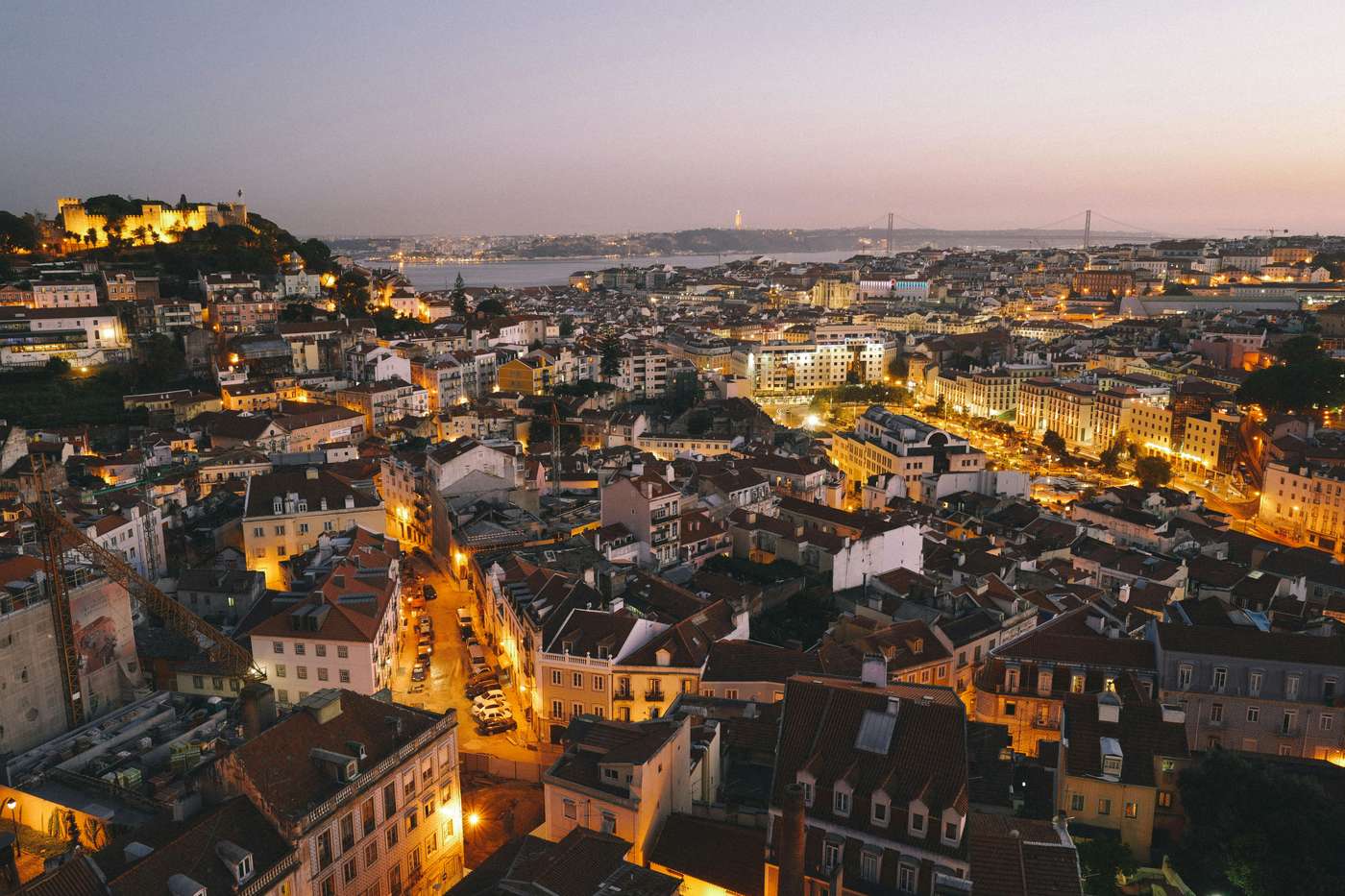
Lisbon city breaks are Europe's best value postcard, seven hills tumbling down to the Tagus, yellow trams clattering past pastel houses, and pastéis de nata warm from the oven on every corner. Cheap to eat in, cheap to drink in, easy to fly to, and somehow still one of the most underrated capitals on the continent.
☀️ Good to Know for your Lisbon Holiday
☀️ Lisbon gets over 300 days of sunshine a year with summer temps hitting 27-28°C. Even winter rarely drops below 10-14°C, so it works as a year-round city break.
💷 Euro. A small draft beer costs around €1.50-2.50 in a local bar. A three-course lunch menu (menu do dia) at a neighbourhood restaurant runs about €8-12, and a proper dinner for two with wine is closer to €40-60.
🌉 Lisbon's 25 de Abril Bridge looks exactly like San Francisco's Bay bridge, and that's not a coincidence - it was built by the same American company. The locals know it, the tourists double-take at it, and the views of the city from the Cristo Rei statue on the other side are absolutely worth the ferry ride across.
Highlights of Your Holidays to Lisbon 2026/2027
Pasteis de nata fresh from the oven at every turn, plus seafood, ginjinha cherry liqueur and a food scene that punches way above its weight.
Vintage yellow trams rattling through narrow streets lined with azulejo tiles and pastel-coloured buildings.
A city built on seven hills, which means viewpoints (miradouros) around every corner with sunsets that stop you in your tracks.
Fado, Lisbon's signature music, drifting out of tiny Alfama restaurants, where the wine is cheap and the atmosphere is impossible to fake.
Lisbon holiday tips from our expert...
"We were lucky enough to be in Lisbon on 12 June, for the festival of Santo António, its patron saint. It's brilliant madness, people grill sardines in their doorways, sell beer out of their front rooms, and the lanes fill with smoke and accordion music. It's all free, and the 13th is a holiday in Lisbon, so nobody's rushing home. Two more tips. Casa do Alentejo near Restauradores, was one of the best places we ate all trip. It just looks like a scruffy doorway but it opens into a Moorish courtyard with painted ballrooms and proper cooking at canteen prices. And finally, definitely take the ferry over to Cacilhas for lunch on the water at Ponto Final, with the whole city sat opposite you. Book ahead (by email only), it's worth it."
-Rob Brooks, OtB Holiday Expert
Lisbon is perfect for you if...
You want a city break where the sun is as likely to shine in October as July
You would like to eat extremely well for about half what the same meal costs in Paris or Amsterdam
You want a city and a beach in the same trip, without hiring a car or changing hotels
You would rather spend an evening in a tiny room listening to live music you couldn't hear anywhere else than dancing to techno
You like a city you can walk, as long as somebody warns your knees about the hills
🏨 Top Hotels for Your Lisbon Holidays 2026/2027
Lisbon has everything from converted palaces on the main boulevard to boutique boltholes in the backstreets of Alfama. Browse all our Lisbon hotels or scan our top picks below....
👨👩👧👦 What are the best family hotels for a Lisbon city break?
Hotel Mundial has a rooftop restaurant on the eighth floor with panoramic views across the city and a central position near Rossio Square, with the space and the facilities to keep a family comfortable. A solid, reliable four-star base.
Hotel Lisboa Plaza is a family-run four-star just off Avenida da Liberdade with recently refurbished rooms, close to the metro and walkable to the main sights. Part of Lisbon's Heritage Collection, so it has character as well as convenience.
💑 Where should couples stay on a Lisbon city break?
Internacional Design Hotel is a four-star on Rossio Square where you pick your room style: Urban, Tribal, Zen or Pop. The rooftop bar serves Portuguese wines with cracking views, and Alfama, Chiado and the fado houses are all walkable.
The Lift Boutique Hotel has just 27 rooms in a historic Pombaline building with original woodwork and castle views from some of them. Intimate, well located, and the kind of place that feels like a local secret.
✨ What are the best luxury hotels in Lisbon?
Pousada De Lisboa is five-star right on Praca do Comercio, Lisbon's grandest waterfront square, with an indoor pool, a spa and a sun terrace. The building alone is worth the money and the location could not be more central.
Tivoli Lisboa is five-star on Avenida da Liberdade with a rooftop terrace bar over the city, two restaurants and a sky bar. Classic luxury on Lisbon's grandest address.
🎉 What are the best Lisbon hotels for a group city break?
Bairro Alto Hotel has a spa, a fitness centre and a sauna, right in the middle of the nightlife district. Chiado's shops and cafes are two minutes away and the Bairro Alto bars are on the doorstep.
Czar Lisbon Hotel is a four-star near Rossio Square with a Portuguese restaurant, a gym and a metro station nearby. Chic rooms at a fair price, which leaves more of the budget for the night out.
💰 What are the best cheap hotels in Lisbon?
Turim Luxe Hotel is in the historic district with a 24-hour bar and modern design, close to Sao Jorge Castle and the main sights, at a price that keeps Lisbon's bargain reputation intact.
Hotel Avenida Park sits by Parque Eduardo VII at the top of Avenida da Liberdade, a straight metro run from the middle and noticeably cheaper for the standard than the same room further down the hill.
Inspira Liberdade Boutique Hotel is a design-led four-star just off the main boulevard with a spa and a well-regarded restaurant, and it consistently prices below what the address suggests.
Turim Europa Hotel has a reading room, a bar doing afternoon teas and an on-site gym, in a quiet spot with good transport links. Straightforward and cheap.
Must See in Lisbon
Lisbon isn't a beach destination (though the coast is only 30 minutes away, very easily reached and totally stunning, see our beaches section below). Lisbon is a city you explore on foot, or by tram, and with a pastel de nata in hand. Here's what to prioritise.
Castelo de Sao Jorge is a Moorish castle on the highest hill in the city with panoramic views across every rooftop, the river and the bridge. Wander the battlements, explore the archaeological site and catch your breath in the courtyard gardens. It's worth the climb for the views alone.
Belem Tower and Jeronimos Monastery are both UNESCO World Heritage Sites in the Belem district, about half an hour west of the centre by tram or seven minutes by train from Cais do Sodre. The tower is a 16th-century fortress on the waterfront, and the monastery is one of the most elaborate examples of Manueline architecture in the world. The tower reopened in May 2026 after a year of restoration and now runs timed entry, so book a slot before you go. Then grab a pastel de nata from Pasteis de Belem down the road.
Tram 28 is a rattling vintage tram that winds through Lisbon's narrowest streets, past the cathedral, through Alfama and up to Graca. A functioning public transport route that doubles as the city's best budget sightseeing tour. Tap on with a rechargeable travel card rather than paying cash on board, which costs nearly double, and ride early morning to dodge the queues.
The miradouros, Lisbon's viewpoints, are what make the city look the way it does in photos. Santa Luzia and Portas do Sol look out over Alfama's rooftops to the river, and Graca puts the castle in the frame. All free, and best at sunset.
Alfama district is the oldest neighbourhood in Lisbon, a labyrinth of narrow lanes, tiled facades and tiny Fado restaurants. Get lost on purpose. Every alleyway reveals another viewpoint, another cafe, another moment that reminds you why this city gets under people's skin.
Time Out Market puts Lisbon's top chefs under one roof in the Mercado da Ribeira. Codfish croquettes, gourmet burgers, fresh oysters and pasteis de nata, all at shared tables in a buzzing market hall atmosphere. Get there for lunch to avoid the worst of the evening crowds.
LX Factory is a converted industrial complex beside the 25 de Abril Bridge, packed with independent shops, galleries, restaurants and bars. Sunday brunch here is a Lisbon institution, and the whole site is worth an afternoon.
Beaches near Lisbon
Lisbon has no beach of its own, and it barely matters, because it has one of the best commuter coastlines in Europe. The train from Cais do Sodre station in the middle of the city runs along the water to a string of proper Atlantic beaches, and the far end takes about thirty-five minutes. No car, no transfer, and a single ticket costs less than a coffee.
Estoril is the first of the two main stops, about thirty minutes out. Praia do Tamariz is the beach everyone means: sheltered, sandy, with a promenade behind it, the old casino across the road and a row of places to eat looking at the water. It has been a resort since long before Lisbon was a city-break destination and it still feels like one.
Cascais is five minutes further on and the livelier of the pair, a former fishing town turned chic seaside resort with a working marina, a cluster of small sandy coves right in the middle of town, and better restaurants than a place this pretty has any need for. Both are destinations in their own right, so if the beach is the point of the trip rather than a day out, book there and do Lisbon as the day trip instead.
Guincho, a few kilometres beyond Cascais, is the wild one: a wide Atlantic strand backed by dunes inside the Sintra-Cascais natural park, with serious wind and serious surf. Beautiful, and not a swimming beach for children.
Costa da Caparica is on the other side of the Tagus and it is where Lisbon actually goes at the weekend. Fifteen kilometres of open Atlantic sand, surf schools all along it, and beach bars that stay open into the evening. Allow around 45 minutes to an hour by public transport: either the direct bus from Areeiro, or the ferry across to Cacilhas and a bus from there, which is the better journey.
One thing to know about all of it: this is the Atlantic, not the Mediterranean. The water is cold, around 17 to 19°C even in August, and the waves at the exposed beaches are real. That is exactly why the surf is good, and why the coves at Cascais and the sheltered end at Estoril are the ones to pick if you want to swim rather than be knocked over.
📍 Where to Stay in Lisbon
Lisbon's neighbourhoods each have a distinct personality. Here's the quick guide to picking the right base for your holiday to Lisbon.
👨👩👧👦 Where should families stay in Lisbon?
Parque das Nacoes is the modern, flat end of the city, which after a day on the hills is worth more than it sounds. Home to the Oceanarium, the cable car and wide riverside promenades, with contemporary hotels, pools and a straight metro run into the centre.
Baixa and Rossio is central, flat and walkable, with tram stops, metro stations and the main sights within reach. It is the easiest base if you want to do the city on foot.
💑 Where should couples stay in Lisbon?
Chiado and Bairro Alto is the romantic heart of it: fado restaurants, rooftop bars, independent boutiques and cobbled streets that look their best after dark.
Alfama is the oldest district, all winding lanes, castle views and proper fado houses. Stay here for atmosphere over convenience, and know that the streets are steep.
🎉 Where should groups stay in Lisbon?
Bairro Alto and Cais do Sodre is the nightlife axis. Bairro Alto has dozens of small bars packed into a few streets and Cais do Sodre, around Pink Street, is where the clubs are. Five minutes' walk between them, and a hotel in Chiado splits the difference.
🏖 Where should I stay in Lisbon for the beach?
The coast west of the city, at Estoril or Cascais. Both are 30 to 40 minutes by train from Cais do Sodre, both have sandy beaches and proper resort hotels, and both put you close enough to do Lisbon as a day trip rather than the other way round. The obvious answer if the trip is a week rather than a long weekend.
🗣️ Local Lingo
Portuguese is the official language and it sounds nothing like Spanish (a common mistake that locals will gently correct you on). English is widely spoken in tourist areas, but a few words of Portuguese go down brilliantly.
Olá, oh-LAH, Hello
Obrigado (men) / Obrigada (women), oh-bree-GAH-doo / oh-bree-GAH-dah, Thank you
Uma imperial, por favor, OO-mah im-peh-ree-AL, poor fah-VOR, A small draft beer, please (the essential Lisbon order)
Tudo bem?, TOO-doo BENG, How are you / All good?
Pastel de nata, pash-TEL deh NAH-tah, The custard tart, pronouncing it properly is the difference between tourist and regular
Saudade, sow-DAH-deh, The untranslatable Portuguese word for a bittersweet longing, the feeling behind every Fado song
Cheap holidays to Lisbon
Lisbon holidays are some of the best value city breaks in western Europe. A three-course lunch is only €8-12, a small beer is often under €2.50, and the single most famous thing to eat in the city is a custard tart that costs a euro or so. You can have a very good day here for the price of a mediocre one somewhere a little fancier.
When it's cheapest. November to February is the quiet stretch, and Lisbon is one of very few European capitals where that's a real option rather than a compromise: winter highs still sit around 15°C and the light in January is lovely. Late autumn and early spring sit in the middle, and June to September is the busiest time for holidays to Lisbon.
Where the value is. Stay a metro stop or two out of Baixa and you'll pay noticeably less for a better room: the top of Avenida da Liberdade, Saldanha and Parque das Nacoes are all a few minutes from the middle. Eat where the menu do dia is chalked on a board rather than printed in four languages. Tap on with a rechargeable travel card, because paying cash on the tram costs nearly double. And drink vinho verde and Portuguese reds rather than anything imported.
Two things that catch people out. Lisbon charges a municipal tourist tax of €4 per person per night, capped at seven nights and paid at the hotel, with under-13s exempt. And the bread, olives and cheese that arrive before you order (the couvert) aren't free. It's fine to send them back if you don't want them, but if you eat them you will be charged.
Lisbon Holidays 2026/2027 - Travel Guide
💑 What are the best things to do in Lisbon for couples?
A fado evening in Alfama is the quintessential Lisbon night. Find a tiny restaurant with live music, order grilled fish and a bottle of house wine, and let the room do the rest. Most fado houses work on a minimum spend rather than a cover charge, which is fair for what you get.
Sunset at Miradouro da Graca or Miradouro de Santa Catarina. Bring a bottle from a nearby shop and join the locals on the wall watching the light change over the river. Free, and one of the best things you can do here.
A day trip to Sintra, forty minutes by train from Rossio. The Pena Palace is a riot of colour on a hilltop and the Moorish Castle has the views. Book a timed slot for Pena before you go, because entry is now for a specific time and they sell out. Midweek if you can.
Dinner at Belcanto, Jose Avillez's two-Michelin-star restaurant in Chiado, is modern Portuguese cooking that is playful rather than solemn. Book weeks ahead. His Bairro do Avillez around the corner is the casual version and nearly as good.
A sunset boat trip on the Tagus gives you a completely different view of the city, and several operators run from the Belem waterfront with drinks included.
👨👩👧👦 What are the best things to do in Lisbon with kids?
The Oceanario de Lisboa in Parque das Nacoes is one of the largest aquariums in Europe and a proper full day: sharks, sea otters, penguins and hundreds of species across four ocean habitats. Next door are a riverside cable car and the hands-on Pavilhao do Conhecimento science museum.
Ride Tram 28 up to Castelo de Sao Jorge and let them play at being knights on the battlements. The grounds are spacious and shaded, and the views keep the adults going.
Cascais, thirty-five minutes from Cais do Sodre with trains every twenty minutes, has safe swimming beaches, a promenade full of ice cream and the Boca do Inferno sea cave, which children find genuinely thrilling.
Lisbon Zoo in Sete Rios has a cable car running above the enclosures, a dolphin presentation three times a day through the summer, and over 300 species. Open since 1884 and good for a full morning.
Parque Eduardo VII is a big, flat green space at the top of Avenida da Liberdade where everyone can run about while the adults recover from the hills. The greenhouses at the top are worth a look and the view down to the river is one of the best in the city.
🎉 What are the best things to do in Lisbon for groups?
Bairro Alto is the group night sorted: around 250 bars packed into a few narrow streets, all within stumbling distance. Most open around ten and the whole area has a street-party feel at the weekend. Drinks are cheap and the crowd is a good mix of locals and visitors.
A tuk-tuk tour is nippy enough for the narrow streets and the drivers know the viewpoints. Note that tuk-tuks are now restricted from a lot of the historic centre, so routes are more limited than they used to be and it is worth checking what a tour actually covers.
A private catamaran on the Tagus for a half day, with drinks, music and the Lisbon skyline behind you. Several operators run group packages.
Surf at Costa da Caparica, about 45 minutes to an hour from the city, where a long Atlantic beach and a row of surf schools do group lessons. The best possible way to shake off the night before.
Cervejaria Ramiro is a group institution: huge platters of prawns, crab and clams, finished with a steak sandwich. It now takes online bookings with a deposit, so book rather than queueing, and come hungry.
🍴 What are the best things to do in Lisbon for foodies?
Time Out Market at Cais do Sodre is the curated graze, with dozens of Lisbon's best chefs under one roof and everything from cod croquettes to oysters side by side. Lunchtime beats the evening rush.
Belcanto in Chiado is Jose Avillez's two-Michelin-star tasting menu, and Portugal's most internationally celebrated restaurant. Book weeks ahead.
Cervejaria Ramiro on Avenida Almirante Reis is the legendary 1950s seafood cervejaria. Tiger prawns, percebes, clams in garlic, and a steak bifana at the end instead of pudding.
A pastel de nata crawl is mandatory. Manteigaria in Chiado, Pasteis de Belem in Belem for the original 1837 recipe, Aloma in Campo de Ourique. Try all three and pick a side.
A ginjinha shot at A Ginjinha on Largo de Sao Domingos is the proper Lisbon ritual: a tiny 19th-century shop serving cherry liqueur in a chocolate cup, drunk standing on the pavement. When they ask com elas?, meaning with the cherries, the answer is yes.
🌍 More Destinations
🏖️ Algarve - Golden cliffs, Atlantic beaches and some of Europe's best golf courses
🏘️ Albufeira - Algarve's liveliest resort with beach bars and the famous Strip
🏖️ Vilamoura - Upscale marina, championship golf and a more polished Algarve vibe
City Breaks
Popular Lisbon hotels
More Lisbon hotelsStunning Lisbon resorts
Weather in Lisbon
JAN
FEB
MAR
APR
MAY
JUN
JUL
AUG
SEP
OCT
NOV
DEC
June to September is the warm half, with average highs from 26°C in June to 29°C in August, long evenings and very little rain. July and August are the busiest and the hottest, and the hills are hard work in the middle of the day.
May and October are the two months regulars book. Highs of 23°C, the light at its best, everything open, and comfortable enough to walk the city all day.
March and April run 19 to 20°C with the jacarandas coming out in late spring, and it is the window when the city feels like it belongs to the people who live in it.
November to February holds average highs of 15 to 18°C, which is warmer than spring at home. It rains more than the rest of the year, though "more" here means around twelve wet days a month rather than a washout, and the pay-off is a city with no queues and hotel rates to match.
View destination on a map
View destination on a map
FAQs
How long does it take to fly to Lisbon?
How long does it take to fly to Lisbon?
It takes about 3 hours to fly to Lisbon from the UK.
What’s the time difference between the UK and Lisbon?
What’s the time difference between the UK and Lisbon?
Lisbon has no time difference with the UK.
What currency do they use in Lisbon?
What currency do they use in Lisbon?
The official currency of Lisbon is the Euro.
What language do they speak in Lisbon?
What language do they speak in Lisbon?
The official language spoken in Lisbon is Portuguese.
Is Lisbon expensive?
Is Lisbon expensive?
It's one of Europe's better-value capitals. Expect around €2-3 for a beer, €10-15 for a meal, and €1.50-2 for a pastel de nata. Your wallet will thank you.
Is Lisbon good for families?
Is Lisbon good for families?
Absolutely – the Oceanarium is world-class, kids love the trams and castle, and there's gelato on every corner. Just be prepared for those hills with a buggy.
What's the best area to stay in Lisbon?
What's the best area to stay in Lisbon?
Baixa and Chiado are central and walkable to everything, and Hotel Mundial near Rossio Square is a reliable base.
Bairro Alto's brilliant for nightlife, with the Bairro Alto Hotel right in the middle of it.
Alfama's got old-school charm but steep streets.
Parque das Nações is modern and flat, great for families.
See all our Lisbon hotels here.
What should I eat and drink in Lisbon?
What should I eat and drink in Lisbon?
Start with a pastel de nata (custard tart) from Pasteis de Belem or Manteigaria - they're served warm and barely cost over a euro. For seafood, Cervejaria Ramiro is legendary for its prawns and clams. Try a bifana (pork sandwich) from a street vendor, bacalhau (salt cod, served about 365 different ways) at any traditional tasca, and finish with a shot of ginjinha (cherry liqueur) from one of the tiny bars near Rossio Square. Time Out Market in Cais do Sodre puts dozens of Lisbon's best chefs under one roof if you want to graze through the lot.
Can I get to the beach from Lisbon?
Can I get to the beach from Lisbon?
Easily, and it is one of the best things about the city. Estoril and Cascais are 30 to 40 minutes by train from Cais do Sodre station, on a line that runs along the water the whole way, with sandy beaches and safe swimming at the other end. Trains go every twenty minutes and a single costs a couple of euros.
Costa da Caparica, across the river, is the long Atlantic surf beach the locals use. Allow 45 minutes to an hour: either the direct bus from Areeiro, or the ferry from Cais do Sodre to Cacilhas and a bus from there, which is much the nicer trip.
You do not need a car for any of it. One warning: this is the Atlantic, so the water sits around 17 to 19°C even at the height of summer. Bracing is the word.
How long do I need for a Lisbon city break?
How long do I need for a Lisbon city break?
Three nights gets you the core, the central neighbourhoods (Baixa, Chiado, Alfama, Bairro Alto), the castle, a Fado dinner, and a Belém afternoon. Four nights adds a Sintra day trip. Five nights or a full week gives you the coast (Cascais, Estoril, Costa da Caparica) and time for the unhurried wander through Alfama and a slower food itinerary. Most people book a long weekend; if your dates allow, a midweek four-nighter is the value-best shape.
Is Lisbon good for an all-inclusive holiday?
Is Lisbon good for an all-inclusive holiday?
Lisbon is a bed-and-breakfast city rather than an all-inclusive one, and once you have eaten here you will be glad of it. Nobody comes to Lisbon to eat in their hotel.
It also costs you very little to eat out here. A three-course menu do dia at a neighbourhood restaurant is €8 to €12, a beer is under €2, and dinner for two with wine is €40 to €60. Most of our Lisbon hotels include breakfast; budget for two meals out a day on top and you will eat well without spending a fortune.
If all-inclusive is what you are after, the Algarve does it properly.
Is Lisbon a good city break?
Is Lisbon a good city break?
It is one of the best in Europe. Most city breaks give you two of the following three, culture, good weather or good value. Lisbon gives you all three: UNESCO monuments and a 12th-century castle, average highs above 15°C in January, and a dinner bill roughly half what the same meal costs in Paris, Amsterdam or Copenhagen.
It is also the right size. Three nights covers the central neighbourhoods, the castle, a fado dinner and a Belem afternoon without rushing. And unlike almost any other European capital, if the city starts to feel like hard work you are thirty-five minutes by train from an Atlantic beach.
The one honest caveat: the hills are steep and the pavements are polished limestone, which is beautiful but slippery in the rain. Bring shoes with grip.
Is a weekend enough for Lisbon?
Is a weekend enough for Lisbon?
For a first visit, yes. Two nights gets you Baixa, Chiado and Alfama, the castle and a fado dinner, and three nights adds Belem and an unhurried evening at a viewpoint. That's why so many Lisbon city breaks are long weekends.
Fly out in the morning if you can, because Lisbon is at its best in the evening and a late arrival costs you a third of a short break. If you can stretch to a fourth night, that's the one that buys you Sintra or the coast.