
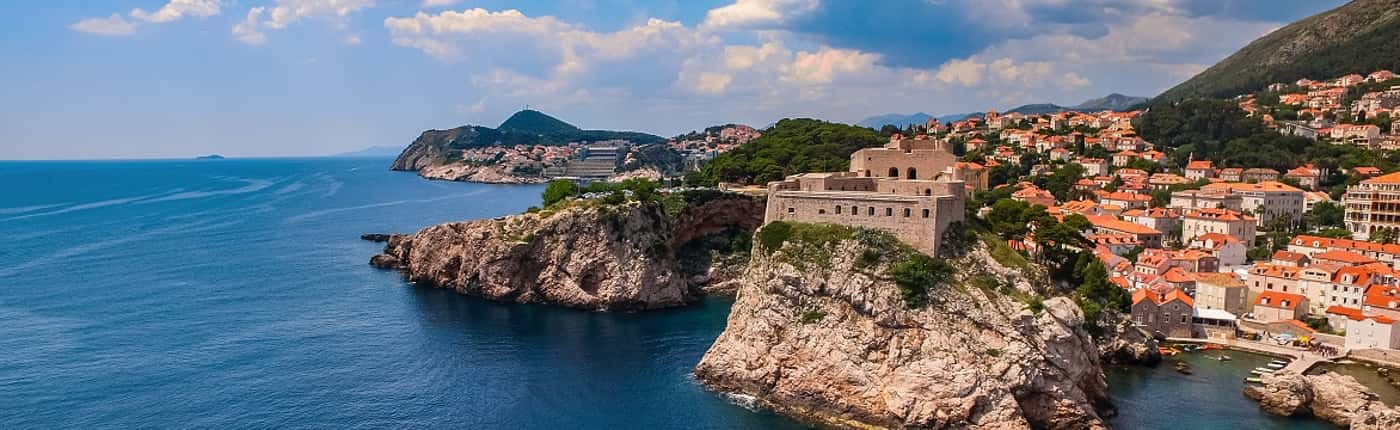
Dubrovnik
If you want to see what all the fuss is about and experience Croatia's crown jewel, Dubrovnik's absolutely where you need to be! This gorgeous city is basically a real-life fairy tale - imagine medieval stone walls rising straight from the sparkling Adriatic, terracotta rooftops glowing in the sunshine, and narrow cobblestone streets that look like they've been pulled straight from Game of Thrones (which they literally have been - hello King's Landing!)
The Pearl of the Adriatic
Dubrovnik's Old Town is a UNESCO World Heritage Site that'll blow your mind - it's completely surrounded by massive medieval walls that you can actually walk around for the most gorgy 360-degree views. The main street, Stradun, is pure magic with its polished limestone paving and elegant baroque buildings housing buzzing cafes, boutique shops, and restaurants. George Bernard Shaw called it "paradise on Earth," and honestly, when you're sipping Croatian wine while watching the sunset over the Adriatic from those ancient ramparts, you'll understand why!
Living history meets luxury
The brilliant thing about Dubrovnik is it's not just a museum - it's a proper living, breathing city where people actually live and work among all this incredible history. You can stay in palaces that once hosted royalty (Queen Elizabeth II and Elizabeth Taylor have both stayed at Hotel Excelsior!) Dine in buildings that are hundreds of years old, and explore fortress walls that have protected the city for centuries. The whole place perfectly balances its incredible historical heritage with modern luxury and sophistication.
Perfect coastal playground
Beyond the famous Old Town, Dubrovnik's got gorgeous beaches, luxury resorts, and brilliant day trip opportunities. You can take the cable car up Mount Srđ for incredible panoramic views, hop on a ferry to the lush island of Lokrum for swimming and exploring, or venture to nearby Montenegro or Bosnia for even more adventures. The Lapad Peninsula offers beautiful beaches and upmarket hotels, while areas like Ploče and Pile give you luxury accommodations just steps from the historic centre.
Yes, it's become incredibly popular (especially since Game of Thrones), but there's a reason millions of people flock here - Dubrovnik is genuinely one of the most beautiful cities in the world. Just be prepared for crowds in summer and prices that reflect its status as Croatia's most prestigious destination! 🏰👑
Popular Dubrovnik hotels
More Dubrovnik hotelsStunning Dubrovnik resorts
Popular Split destinations
Weather in Dubrovnik
JAN
FEB
MAR
APR
MAY
JUN
JUL
AUG
SEP
OCT
NOV
DEC
View destination on a map
View destination on a map
FAQs
How long does it take to fly to Croatia?
How long does it take to fly to Croatia?
It takes about 2h 30m to fly to Croatia from the UK.
What’s the time difference between the UK and Croatia?
What’s the time difference between the UK and Croatia?
Croatia is 1 hour ahead of the UK.
What currency do they use in Croatia?
What currency do they use in Croatia?
The local currency is the Kuna.
What language do they speak in Croatia?
What language do they speak in Croatia?
The official language spoken in Croatia is Croatian.
When's the best time to visit Croatia?
When's the best time to visit Croatia?
July and August are absolutely brilliant if you want guaranteed sunshine and that buzzing holiday atmosphere – temperatures hit around 28-32°C, the sea's properly warm for swimming, and everything's in full swing with beach bars, restaurants, and activities all running at their best. The shoulder months (May-June and September-October) offer gorgeous weather (22-27°C) with fewer crowds, and the sea's still lovely and warm, especially in September after the summer heat. If you're after the full-on summer holiday experience with all the energy and excitement, peak season delivers exactly that!
🗣️ Do people speak English in Croatia?
🗣️ Do people speak English in Croatia?
Yes! English is widely spoken across Croatia, especially in tourist areas, hotels, restaurants, and along the coast. Younger Croatians generally speak excellent English, and you'll have no trouble getting around or ordering in restaurants. In smaller villages or rural areas, you might encounter less English, but locals are friendly and helpful, and you'll manage just fine with a smile and a bit of patience!
🚌 How do I get around Croatia?
🚌 How do I get around Croatia?
Getting around Croatia is dead easy! Ferries are your best mate for island-hopping – they're comfortable, affordable, and the views are absolutely stunning. Croatia's bus network is fantastic, linking up all the major towns, cities, and beaches with comfortable, reliable coaches. If you're planning to explore multiple destinations or fancy the freedom to discover hidden beaches and villages, hiring a car gives you loads of flexibility. In cities like Split and Dubrovnik, everything's walkable in the historic centres, and taxis or Uber are available if you need them.
When is best to visit Croatia?
When is best to visit Croatia?
Peak season runs June to September when the Dalmatian coast is at full volume, the island ferries are running and the beach clubs on Pag Island are open. July and August are the hottest months, with temperatures hitting 30+ degrees and every resort town buzzing.
For cheaper holidays to Croatia with warm weather and fewer crowds, May and October are brilliant. The sea stays warm into late October, and shoulder-season hotel prices can drop significantly. Families with school-age kids will find August busy but well set up, with waterparks, kids' clubs and family-friendly resorts across Makarska, Rabac and Zadar.
What is the food like in Croatia?
What is the food like in Croatia?
Croatian food is proper Mediterranean with regional twists that vary dramatically between the coast and the interior. Peka is the signature dish, where meat and vegetables are slow-cooked under a metal bell over an open fire, and you will find it at konobas (taverns) along the Dalmatian coast. Black risotto (crni rizot) made with squid ink is the other must-try, best eaten harbourside in Split or Hvar.
In Istria, truffle hunting is a genuine thing, with family-run estates offering tastings paired with local Malvasia wines. Strukli, a baked pastry stuffed with cottage cheese and sour cream, is a Zagreb staple and worth the trip inland. For restaurants, Dvor in Split does fine-dining seafood on a clifftop, Konoba Menego in Hvar serves authentic cured meats and local cheese, and La Struk in Zagreb does nothing but strukli, and does it brilliantly.
What events are there in Croatia?
What events are there in Croatia?
The calendar runs year-round. Dubrovnik Summer Festival (July-August) fills the Old Town with open-air theatre, classical music and dance across 70+ performances. Ultra Europe in Split (July) is one of Europe's biggest electronic music festivals, pulling 150,000+ visitors over three days. Outlook Festival on Pag Island (August-September) covers bass, dub and everything in between across a fortress venue.
The Motovun Film Festival (July) screens independent cinema in a hilltop Istrian village. Zadar's Night of the Full Moon (July) lights up the harbour with traditional food stalls, live music and locals in folk costumes. In winter, Dubrovnik runs a Christmas market inside the Old Town walls, and Zagreb's Advent market has been voted the best in Europe multiple times.
Tell me about the nightlife in Croatia
Tell me about the nightlife in Croatia
Croatia's nightlife splits into two scenes and both are brilliant.
The club circuit centres on Zrce Beach on Pag Island, where Papaya, Noa Beach Club and Aquarius run all-day-all-night parties with international DJs from June through September. Boat parties, foam parties and sunrise sets are the norm.
In Split, the bars and restaurants inside Diocletian's Palace spill out onto the Riva promenade every evening, and Central the Club hosts legendary afterparties during Ultra Europe.
Culture Club Revelin in Dubrovnik is built into a 16th-century fortress, pairing ancient stone walls with serious sound systems.
Hvar Town has the more glamorous end of things, with Carpe Diem bar sending a boat to its private island for late-night dancing.
For something more laid-back, Strossmartre in Zagreb is an outdoor strip of bars draped in fairy lights with live jazz.
Is Croatia good for a family holiday?
Is Croatia good for a family holiday?
Absolutely. Croatia family holidays work brilliantly on the Istrian Riviera and the Makarska Riviera. Rabac on the Istrian coast has calm bays, pine-shaded beaches and all-inclusive family resorts with proper kids' clubs. Makarska has soft-pebble beaches backed by mountains, shallow water and play areas.
For days out, Plitvice Lakes National Park has wooden boardwalks through forest and past 16 terraced lakes connected by waterfalls, and Krka National Park lets you swim beneath Skradinski Buk waterfall. Dubrovnik's city walls are a brilliant family walk at 1,940m around the medieval fortifications with views over terracotta rooftops and out to the Adriatic. Sibenik is the quieter Dalmatian alternative with easy access to Krka.
Can I book a cheap package holiday to Croatia?
Can I book a cheap package holiday to Croatia?
Yes, and it is one of the smartest ways to do it. A package holiday to Croatia bundles your flights and hotel into one booking with package protection (ATOL or IATA), which means your money is covered if anything goes wrong. Package deals to Croatia often work out cheaper than booking flights and accommodation separately, especially in peak season when flight prices spike. For the best Croatia holiday deals, flexible dates help. Flying midweek, choosing a resort on the Istrian coast rather than Dubrovnik in August, and looking at shoulder-season months like May, June or October can all bring the price down. Novigrad, Porec and Tucepi are all brilliant-value alternatives to the big-name destinations.